Electing to Fight: Why Emerging Democracies Go to War
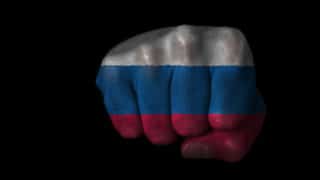
Harriman Institute Director, Jack Snyder (Robert and Renee Belfer Professor of International Relations) and Edward D. Mansfield (Hum Rosen Professor of Political Science at the University of Pennsylvania) are co-authors of Electing to Fight: Why Emerging Democracies Go to War (MIT Press, August 2005). Drawing on both qualitative and quantitative analysis, Mansfield and Snyder show that emerging democracies with weak political institutions are especially likely to go to war. Leaders of these countries attempt to rally support by invoking external threats and resorting to belligerent, nationalist rhetoric. Mansfield and Snyder point to this pattern in cases ranging from revolutionary France to contemporary Russia.
Link to full article
|
|
Organizing Technologies: Genre Forms of Online Civic Association in Eastern Europe
How do civic associations in Eastern Europe organize themselves online? In their article, “Organizing Technologies: Genre Forms of Online Civic Association in Eastern Europe, which is based on data collected on 1,585 East European civil society Web sites, David Stark, Arthur Lehman Professor of Sociology and International Affairs at Columbia University, and his co-authors Balazs Vedres and Laszlo Bruszt identify five emergent genres of organizing technologies: newsletters, interactive platforms, multilingual solicitations, directories and brochures. In contrast to the utopian image of a de-territorialized, participatory global civic society, the authors’ examination of the structure of hyperlinks finds that transnational types of Web sites are not inclined to be participatory. The article was published in The Annals of the American Academy of Political and Social Science (December 2004).
Link to full article
|
|
Conversations on Russia: Reform from Yeltsin to Putin
Much of the discussion of Russia's recent post-Communist history has amounted, both in Russia and the West, to a series of monologues by strong-minded people with starkly divergent views. In contrast, Padma Desai's conversations with influential, intelligent participants and observers provide the reader with a broad, nuanced view of what has and has not happened in the last fourteen years, and why. In conversations with important figures like Boris Yeltsin, George Soros, Anatoly Chubais, and Yegor Gaidar, Desai considers questions like why the Soviet Union fell apart under Gorbachev, what went wrong with economic reforms after Gorbachev, whether the privatization of Russian assets could have been managed differently, and what the prospects are for the Russian economy in the near future.
Link to full article
|
|
Statehood and Security:
Georgia after the Rose Revolution
Edited by Robert Legvold and Bruno Coppieters
The former Soviet state of Georgia threw off its corrupt and undemocratic government in the "Rose Revolution" of November 2003. Today, the new government under President Mikheil Saaskashvili faces complex security problems both within and outside Georgia's borders. Statehood and Security looks at the many different layers of these challenges and explores the complicated ways they intersect and influence one another. It argues that Georgia's problems need to be taken seriously by the rest of the world and considers what Georgia, its regional neighbors, and the West can do -- within the realm of the politically feasible -- to improve the situation in ways that enhance the security of all concerned.
Link to full article
|
|
Swords and Sustenance:
The Economics of Security in Belarus and Ukraine
Edited by Robert Legvold and Celeste A. Wallander
The stability of the former Soviet states is threatened by their precarious geopolitical position within a turbulent economic and political environment. Swords and Sustenance explores the complex economic dimension of national security for two key post-Soviet countries, Belarus and Ukraine -- that is, how they have dealt with the challenges posed by internal economic and political reform and their relationships with Russia and the West.
Link to full article
|
|
Thinking Strategically:
The Major Powers, Kazakhstan, and the Central Asian Nexus
Edited by Robert Legvold
More than ten years after the breakup of the Soviet Union, none of the major powers, including Russia, has developed a cohesive geopolitical strategy for dealing with the countries and regions that once made up the USSR. Even after September 11 and the sudden importance of Central Asia in the struggle against global terrorism, the United States continues to deal with the region in fragmented and incomplete ways. Thinking Strategically, the first volume in a series focusing on security challenges posed by the former Soviet Union, addresses the economic, political, and security interests at stake in Kazakhstan for Russia, the US, China, Europe, and Japan.
Link to full article
|
|
Logics of Hierarchy: The Organization of Empires, States, and Military Occupations
Political science has had trouble generating models that unify the study of the formation and consolidation of various types of states and empires. The business-administration literature, however, has long experience in observing organizations. According to a dominant model in this field, business firms generally take one of two forms: unitary (U) or multidivisional (M). The U-form organizes its various elements along the lines of administrative functions, whereas the M-form governs its periphery according to geography and territory. In Logics of Hierarchy, Alexander Cooley applies this model to political hierarchies across different cultures, geographical settings, and historical eras to explain a variety of seemingly disparate processes: state formation, imperial governance, and territorial occupation.
Link to full article
|
|
Valentin Serov:
Portraits of Russia's Silver Age
Valentin Serov (1865-1911) burst onto the art scene at the age of 22 with his portrait Girl with Peaces. In a short time he became the preeminent portraitist of Russia's Silver Age.
Elizabeth Kridl Valkenier weds art criticism to social history in her study of Serov. She casts the artist's work against the Gilden Age of turn-of-the-century Russia, an era when money and consumption abounded and revolutionary change was taking place at all levels of society. Painting prominent people of the day in business, government, the nobility, and the arts, Serov created a gallery of Russia's important figures--figures seen with a sharp eye and painted with subtle irony.
Link to full article
|
|
Law and Governance in an Enlarged European Union
Edited by George Bermann and Katharina Pistor
This book’s principal aim is to critically address the institutional and substantive legal issues resulting from European enlargement, chiefly those relating to the legal foundations on which the enlarged union is being built. The accession of new member states creates the potential for a stronger and more powerful Europe. Realising this potential, however, will depend on the ability of the EU to develop functional and effective governance structures, both at the European level and at the level of the individual Member States. While the acquis communautaire will ensure that formal laws in the new member states will be aligned with those of existing members, the question remains as to how effective institutions will be in implementing changes, and what effects the imposed changes will have on the legitimacy of the new legal framework.
Link to full article
|
|
Covering Oil: A Reporter's Guide to Energy and Development
For the vast majority of people in most resource-rich countries, natural wealth does not translate into prosperity, but instead leads to environmental and economic devastation, and hampers democratic reform.
Only an informed public can hold leaders to account. Yet local reporting often overlooks the legal, economic, and environmental implications of resource extraction. Covering Oil: A Reporter's Guide to Energy and Development, a collaborative work of the Open Society Institute's Revenue Watch program and the Initiative for Policy Dialogue, aims to encourage rigorous reporting on these issues by providing practical information about the petroleum industry and the impact of resource wealth on a producing country.
Link to full article
|
|
|